Keynote Speakers

Tudor Achim
CEO and Co-Founder of Harmonic
Title: (Preliminary) Mathematical Superintelligence
Bio: Tudor Achim is the CEO and Co-Founder of Harmonic, the AI lab building the world’s most advanced reasoning engine. Under his leadership, Harmonic has pioneered the concept of Mathematical Superintelligence – the next generation of artificial intelligence that eliminates hallucinations by reasoning through mathematics as opposed to language prediction – and released the world’s first consumer-facing MSI model, Aristotle. Aristotle recently achieved a gold medal-level performance at the 2025 International Mathematical Olympiad, demonstrating problem-solving capabilities that exceed human benchmarks. Before founding Harmonic, Tudor co-founded and served as the CTO at Helm.ai, an autonomous driving software company. Tudor holds a B.S. in Computer Science from Carnegie Mellon University and was a Ph.D. Candidate in Computer Science at Stanford. He brings a rare combination of deep technical expertise and a vision to make mathematically grounded, provably accurate AI broadly available to individuals and institutions worldwide.
Clark Barrett
Professor, Department of Computer Science, Stanford University
Title: CSLib: Building a Platform for AI-assisted Formal Verification in Lean
Abstract: I will explain the new CSLib initiative, with a focus on its code reasoning effort, which aims to build a new industrial-strength formal verification platform in Lean for verifying real-world code. I'll describe the principles and design decisions behind the CSLib code reasoning effort. I'll then illustrate it with an end-to-end example that brings together: AI-assisted code generation and code specification; the Boole language and the Strata framework for language-agnostic code reasoning; trustworthy verification condition generation; and Lean automation through Lean-SMT and AI-assisted theorem proving.
Bio: Clark Barrett is a Professor (Research) of Computer Science at Stanford University. His expertise is in automated reasoning and its applications. He was an early pioneer in satisfiability modulo theories, formal hardware verification, and neural network verification. More recently, he has also pioneered efforts in AI-assisted formal verification. He is the director of the Stanford Center for Automated Reasoning (Centaur), co-director of the Stanford Center for AI Safety, and a member of the CSLib steering committee. He is an ACM Fellow and a two-time winner of the Computer Aided Verification (CAV) award (2021, 2024).
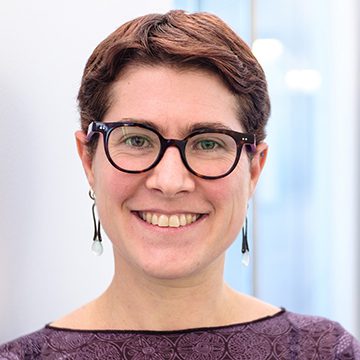
Hadas Kress-Gazit
Professor, Sibley School of Mechanical and Aerospace Engineering, Cornell University
Title: Formal methods for robotics in the age of big data
Abstract: Robots are physical machines interacting with the real world; they are difficult to model, yet we need to guarantee they will be safe. Making them even more difficult to verify is the growing approach of using data, and generative AI, to control them. Given this, what role can, and should, formal methods play in advancing robotics? In this talk I will give a few examples for what we can do with formal methods to "verify" robot behavior, discuss their promise and challenges, and describe the synergies I see with data-driven approaches.
Bio: Hadas Kress-Gazit is the Geoffrey S.M. Hedrick Sr. Professor at the Sibley School of Mechanical and Aerospace Engineering at Cornell University, and the Associate Dean for Diversity and Academic Affairs of Cornell Duffield College of Engineering. She received her Ph.D. in Electrical and Systems Engineering from the University of Pennsylvania in 2008 and has been at Cornell since 2009. Her research focuses on formal methods for robotics and automation and more specifically on high-level specifications and synthesis for robot control. Her group has explored different types of robotic systems including modular robots, soft robots and swarms, and how formal methods can be used for human-robot interaction. She received an NSF CAREER award in 2010, a DARPA Young Faculty Award in 2012, Cornell Engineering’s Excellence in teaching award in 2013 and 2019, and excellence in research award in 2021. She is an IEEE Fellow and has served on DARPA’s Information Science and Technology study group (ISAT), as the program chair for Robotics: Science and Systems (RSS) 2018, the program chair for the International Conference on Robotics and Automation (ICRA) 2022, and the president of the RSS board (2019-2023), among other leadership positions in the robotics community.
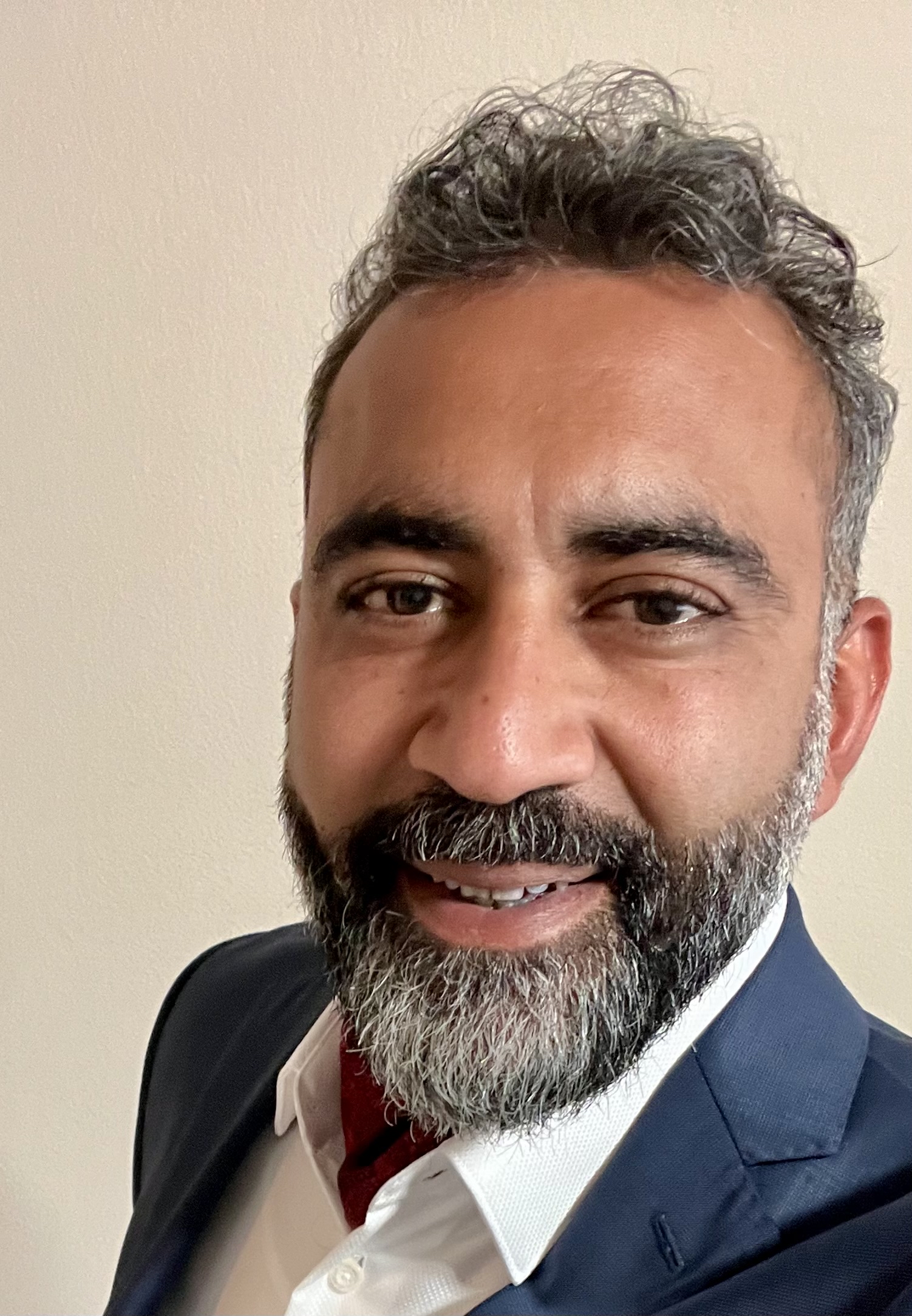
Rahul Kumar
Applied Scientist, The Automated Reasoning Group, Amazon Web Services (AWS)
Title: Verify the Safety of the Rust Standard Library
Abstract: Rust’s standard library underpins every Rust program, yet it contains thousands of unsafe functions whose correctness is assured only by manual reasoning. We report on the first large-scale effort to formally verify the safety of this library, organized as an open challenge program that combines crowdsourced proof engineering with automated harness generation. Over fifteen months, the project integrated four verification tools into continuous integration, attracted contributions from multiple universities and companies, and developed autoharness, a tool that automatically generates proof harnesses at the MIR level. Autoharness produced 15,607 harnesses and verified the absence of undefined behavior in 10,249 functions (37.3% of all functions in the core and std crates). We describe the challenge program design, analyze the coverage results, report on bugs found in the standard library, and identify the main open problems, including generic function verification, intrinsic modeling, and concurrency, as targets for future research.
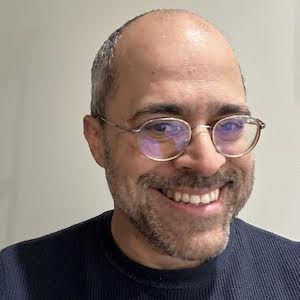
Leonardo de Moura
Senior Principal Applied Scientist, The Automated Reasoning Group, Amazon Web Services (AWS)
Title: Lean 4: A Unified Platform for Programming and Verification
Abstract: Lean 4 is an open-source functional programming language and interactive theorem prover based on dependent type theory. Its powerful type system enables users to write programs and prove properties about them within a single unified framework. In this talk, I will present the key design decisions behind Lean 4, its extensible infrastructure, and recent developments in proof automation, including the grind tactic and our current efforts on scalable verification condition generation. I will also discuss Lean 4's growing adoption by AI research teams, which have used Lean as the backbone for recent breakthroughs in AI-assisted mathematics, and its expanding ecosystem of libraries and users in both mathematics and software verification.
Bio: Leo is a Senior Principal Applied Scientist in the Automated Reasoning Group at AWS. In his spare time, he dedicates himself to serving as the Chief Architect of the Lean FRO, a non-profit organization that he proudly co-founded alongside Sebastian Ullrich. He is also honored to hold a position on the Board of Directors at the Lean FRO, where he actively contributes to its growth and development. Before joining AWS in 2023, he was a Senior Principal Researcher in the RiSE group at Microsoft Research, where he worked for 17 years starting in 2006. Prior to that, he worked as a Computer Scientist at SRI International. His research areas are automated reasoning, theorem proving, decision procedures, SAT and SMT. He is the main architect of several automated reasoning tools: Lean, Z3, Yices 1.0 and SAL. Leo's work in automated reasoning has been acknowledged with a series of prestigious awards, including the CAV, Haifa, and Herbrand awards, as well as the ACM SIGPLAN Programming Languages Software Award twice for Z3 and Lean. Leo's work has also been reported in the New York Times and many popular science magazines such as Wired, Quanta, Nature News, and Scientific American.
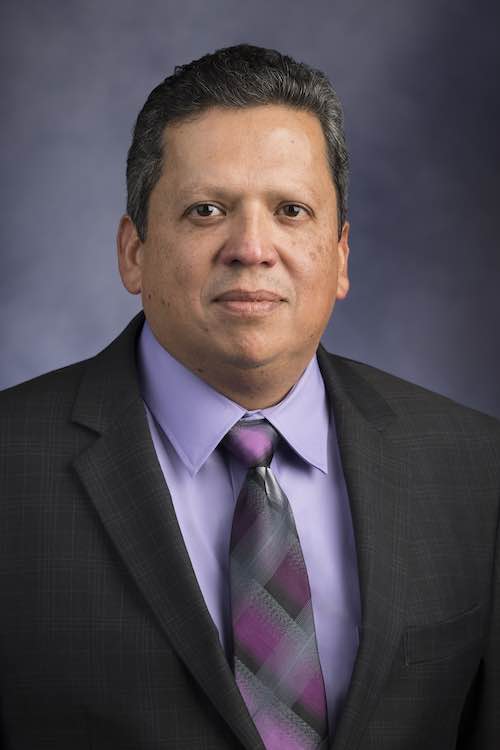
Cesar Munoz
Research Computer Scientist, Safety Critical Avionics Systems Branch, NASA Langley Research Center
Title: Formal Verification in Practice: Interactive Theorem Proving for NASA Safety-Critical Systems
Abstract: For over 30 years, NASA Langley Research Center has developed and applied formal methods to the validation and verification of aerospace systems critical to NASA missions. Central to the success of these efforts was the strategic investment in building a comprehensive verification infrastructure based on interactive theorem proving. This infrastructure is built on SRI's Prototype Verification System (PVS) and includes several key components: NASALib, a large collection of formal PVS developments curated and maintained by the NASA LaRC Formal Methods Team; VSCode-PVS, a modern integrated development environment for interactive theorem proving based on Microsoft Visual Studio Code; PRECiSA, a proof-producing static analyzer for floating-point round-off errors; and Plaidypvs, a logical framework for the verification of cyber-physical systems. These tools are publicly available on GitHub under NASA's Open-Source Agreement. This talk presents real-world examples of verification efforts at NASA where this infrastructure has significantly contributed to the development of safety-critical systems. It also discusses the impact of this research in enhancing aerospace safety and enabling the development of reliable operational concepts and software systems for NASA's autonomous missions.
Bio: Cesar Munoz is a Research Computer Scientist at NASA Langley Research Center, where he leads the Formal Methods Team. He specializes in the development and application of formal methods for designing, implementing, and verifying safety-critical systems of interest to NASA. Cesar holds a PhD in Computer Science from the University of Paris 7 (now Paris Cité University) in France. He began his NASA career as a contractor in 1999 and became a civil servant in 2009. From 2021 to 2023, he served as Senior Principal Applied Scientist at Amazon Web Services, where he managed the S3 Automated Reasoning Team. He returned to NASA in 2023 to continue advancing formal methods research and applications. His primary research focus is theorem proving. As an expert user of SRI's Prototype Verification System (PVS), Cesar has developed numerous publicly available strategies, libraries, and utilities for PVS. These contributions, along with his team's work, have been extensively applied to the verification of safety-critical systems across NASA.